





Introduction (How a VPN Actually Works)
Many people use a VPN without fully understanding how it works. They know it hides their IP address and encrypts their traffic, but the technical details are often unclear. More importantly, many users have unrealistic expectations about what a VPN can and cannot do. A VPN is not a magic solution for total anonymity. It cannot protect you from malware, phishing, or your own mistakes. This guide will explain how a VPN actually works at a technical level, what it protects, and what it cannot do. We will cover the encrypted tunnel, encryption protocols, IP masking, and the limitations of VPNs. By the end, you will have a realistic understanding of VPN capabilities.
Also read: How to Use SOCKS5 on iPhone
Visit worlddumps.site
What a VPN Actually Does at a Technical Level (How a VPN Actually Works)
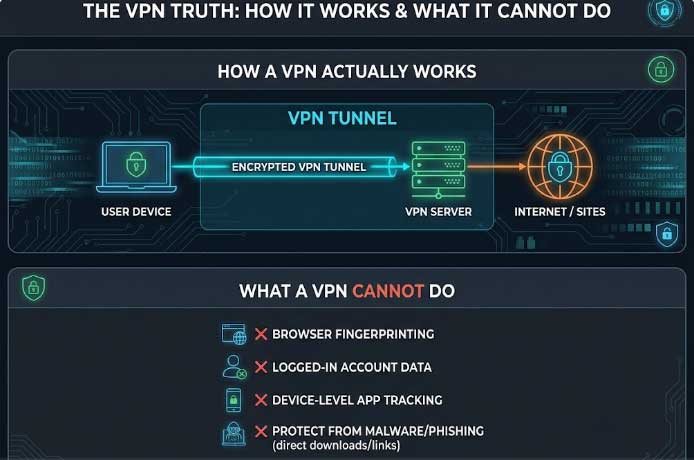
A VPN creates an encrypted tunnel between your device and a remote server. All your internet traffic passes through this tunnel. The VPN server then forwards your traffic to the destination website. This process hides your IP address and encrypts your data so that your ISP cannot see what you are doing. At a technical level, a VPN is a combination of encryption, tunneling, and server routing.
How Data Travels Through a VPN Tunnel
When you connect to a VPN, your device creates a secure connection to the VPN server. Your data is encrypted and placed into packets. These packets are then sent through the tunnel to the VPN server. The server decrypts your data and sends it to the destination website. The response follows the same path back. This ensures that your data is protected from the moment it leaves your device until it reaches the VPN server.
Encryption Protocols: What They Protect and How They Work
VPNs use encryption protocols to secure data. Common protocols include:
- OpenVPN: Uses SSL/TLS for key exchange and AES for encryption.
- WireGuard: Uses modern cryptography for fast and secure connections.
- IKEv2: Often used on mobile devices.
These protocols protect your data from interception and ensure that only the VPN server can decrypt it.
The Role of VPN Servers in Masking Your IP Address (How a VPN Actually Works)
When you connect to a VPN server, your real IP address is replaced with the server’s IP address. This makes it appear as though you are browsing from the server’s location. This masks your true identity and location from websites and your ISP.
Why Your Internet Service Provider Can’t See Your Traffic
Your ISP can see that you are connected to a VPN server, but they cannot see the content of your traffic. The encryption provided by the VPN hides your online activity from your ISP. They only see encrypted data passing between your device and the VPN server.
How Public Wi-Fi Becomes Safer With a VPN: How a VPN Actually Works
Public Wi-Fi networks are often unencrypted, making it easy for attackers to intercept your data. A VPN encrypts all your traffic, so even if someone is monitoring the Wi-Fi network, they cannot see your activity. This makes public Wi-Fi much safer.
The Difference Between VPNs and Proxies
A VPN encrypts all your traffic and routes it through a server. A proxy only routes specific traffic (like web traffic) and does not always encrypt it. VPNs are more secure and offer better protection. Proxies are faster but less secure.
What VPNs Cannot Protect You From (Malware, Phishing, etc.) on How a VPN Actually Works
A VPN cannot protect you from malware, phishing attacks, or viruses. It only encrypts your traffic and hides your IP. You still need antivirus software and safe browsing habits. A VPN will not stop you from clicking a malicious link.
Limitations of VPNs on Local Network Threats
VPNs do not protect against threats on your local network, such as a compromised router or an attacker on the same Wi-Fi. They only protect your traffic as it leaves your device.
How Device Fingerprinting Can Still Identify You (How a VPN Actually Works)
Websites can use device fingerprinting to identify you even when you use a VPN. Your browser, screen resolution, installed fonts, and other characteristics create a unique fingerprint. To avoid this, use anti-detect profiles like those offered by Worlddumps.site.
Why a VPN Won’t Hide Illegal or Criminal Activity From Authorities
If you commit a crime while using a VPN, authorities can still identify you. They can request logs from the VPN provider, use traffic analysis, or deploy other investigative techniques. A VPN is not a shield for illegal activity.
Also read: How to Choose a VPN for OPSEC
The Truth About “No-Log” Policies and What They Actually Cover (How a VPN Actually Works)
A no-log policy means the VPN does not keep records of your activity. But not all no-log policies are equal. Some VPNs still keep connection logs. Only independent audits can verify a true no-log policy.
Why VPNs Can’t Stop Websites From Tracking You Through Accounts
If you log into a website with your account, the website knows who you are regardless of your IP address. A VPN hides your IP but not your login identity.
Speed and Performance Trade Offs Explained (How a VPN Actually Works)
VPNs add overhead to your connection. Encryption and routing through a remote server can slow down your internet speed. The impact depends on the encryption protocol and server distance. WireGuard is the fastest protocol.
What Happens When You Disconnect or the VPN Fails
If the VPN connection drops, your traffic may be exposed. A kill switch prevents this by blocking all traffic until the VPN reconnects. Always use a VPN with a kill switch.
Geographic Restrictions: What a VPN Can and Cannot Bypass (How a VPN Actually Works)
A VPN can bypass geographic restrictions on streaming services like Netflix, but not all services. Some services actively block VPN IP addresses. A VPN can also help access region locked content.
The Difference Between Consumer VPNs and Corporate VPNs
Consumer VPNs are designed for individual users. Corporate VPNs are designed for businesses and offer features like centralized management and compliance. The technology is similar but the use case differs.
Common Misconceptions About VPN Security (How a VPN Actually Works)
- A VPN makes you completely anonymous: False.
- A VPN protects you from all threats: False.
- A VPN hides your activity from authorities: False.
- A VPN bypasses all geo-restrictions: Not always.
Realistic Expectations for VPN Usage (How a VPN Actually Works)
A VPN is a powerful tool for privacy, but it has limitations. Use it for its intended purpose: hiding your IP address and encrypting your traffic. Do not expect it to make you invisible.
Common Mistakes Beginners Make
- Assuming a VPN makes you anonymous.
- Not using a kill switch.
- Ignoring DNS leaks.
- Using a VPN that logs.
- Thinking a VPN protects from malware.
Pro Tips for Using a VPN Effectively on How a VPN Actually Works
- Always enable the kill switch.
- Check for DNS leaks regularly.
- Use a VPN with a verified no-log policy.
- Combine a VPN with anti-detect profiles for anonymity.
- Use Worlddumps.site for SOCKS5 bundles and anti-detect profiles.
Expert Insights on VPN Technology
Experts agree that VPNs are essential for privacy but are not a complete solution. They should be part of a larger security strategy.
Real World Applications on How a VPN Actually Works
VPNs are used for privacy, bypassing geo-restrictions, securing public Wi-Fi, and protecting sensitive data.
Actionable Takeaways
- Use a VPN with a kill switch.
- Check for DNS leaks.
- Combine VPN with anti-detect profiles.
- Use Worlddumps.site for additional tools.
Summary of How a VPN Actually Works
A VPN encrypts your traffic and hides your IP, but it cannot protect you from malware, phishing, or your own mistakes. Use it with realistic expectations.
Conclusion of How a VPN Actually Works
Understand what a VPN can and cannot do. Use it as part of a larger security strategy.
Call to Action: Visit Worlddumps.site to get Non VBV BINs or clonecards.store to get clone cards, legit dumps with pin and carding materials. Also visit cvvdump.uno to get money swift money transfer service which includes bank transfer, PayPal, CashApp, Venmo, Zelle, and Western Union transfers.
Also read: Free VPNs vs. Paid VPNs
FAQ on How a VPN Actually Works
How does a VPN work? It creates an encrypted tunnel between your device and a remote server, routing all your traffic through that server.
What does a VPN protect? It protects your traffic from being seen by your ISP and others on your network. It also hides your IP address.
What can a VPN not do? It cannot protect you from malware, phishing, or your own mistakes. It also cannot make you completely anonymous.
Does a VPN hide my activity from my ISP? Yes, your ISP can only see that you are connected to a VPN, not what you are doing.
Does a VPN hide my activity from my employer? If you are using a company owned device or network, your employer may still be able to monitor your activity.
Can a VPN bypass geo-restrictions? Yes, but not all services. Some streaming services actively block VPN IP addresses.
What is a kill switch? A feature that blocks all internet traffic if the VPN connection drops, preventing IP exposure.
What is DNS leak protection? A feature that ensures your DNS queries go through the VPN, not your ISP.
Can a VPN prevent device fingerprinting? No, but anti-detect profiles can help. Worlddumps.site offers pre-configured profiles.
Is a VPN enough for complete anonymity? No. You need additional tools like anti-detect profiles and anonymous payment methods.


