





If you have been researching online payment methods, carding techniques, or BIN lists, you have probably come across the term “Non VBV BINs.” It is a phrase that gets thrown around a lot in certain circles, but what does it actually mean? Is it a real classification used by banks? Or is it something else entirely?
In this guide, we break down everything you need to know about Non VBV BINs in 2026. We cover what BINs are, why the “Non VBV” label is misleading, how 3D Secure actually works, and what has changed in 2026. We also provide insights into USA, UK, Canada, and Australia BINs, and explain why high balance BINs are not what they seem.
Whether you are a beginner just getting started or an experienced user looking for updated information, this guide is for you.
1. What Is a BIN?
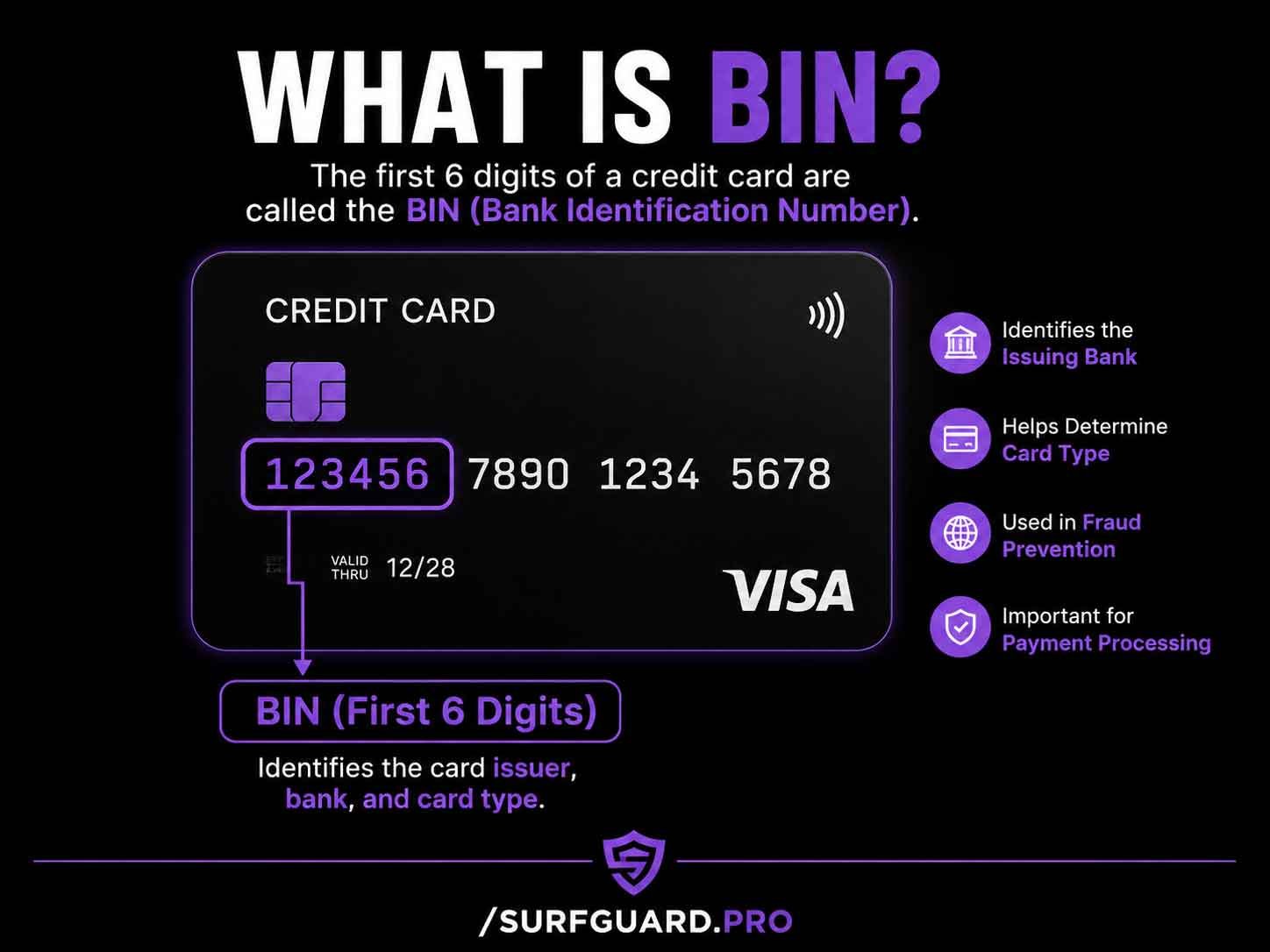
BIN stands for Bank Identification Number. It is the first six digits of a credit or debit card number. Every card issued by a bank has a unique BIN that identifies the issuing institution, the card network (Visa, Mastercard, etc.), the card type (credit, debit, prepaid), and sometimes the country of issuance.
For example, if a card starts with 414720, that BIN belongs to Visa, issued by a specific bank in the United States. The BIN tells you the bank and the card network, but it does not tell you the cardholder’s balance, the current status of the card, or whether the card is enrolled in 3D Secure.
BINs are useful for merchants and payment processors to route transactions correctly. They are also used by fraud detection systems to flag suspicious activity. But BINs are not secret codes that unlock payment approval.

2. What Does “Non VBV” Mean?
VBV stands for Verified by Visa, which is Visa’s version of 3D Secure authentication. When a card is enrolled in Verified by Visa, the cardholder must enter a password or one-time code during online checkout to verify their identity. This adds an extra layer of security.
“Non VBV” literally means the card is not enrolled in Verified by Visa. However, this is not a standard classification used by banks. Banks do not issue “Non VBV” cards. The term is used informally in carding communities to describe cards that are less likely to trigger 3D Secure challenges during online transactions.
In reality, whether a card is “Non VBV” depends on the issuing bank’s policies and the merchant’s payment gateway settings. It is not a fixed property of the BIN.
3. Is “Non VBV” an Official BIN Category?
No. “Non VBV” is not an official BIN category recognized by Visa, Mastercard, or any payment network. You will not find a BIN database that lists “Non VBV” as a field. Banks do not classify cards as Non VBV.
The term is community jargon. It emerged from carding forums where users shared BINs that seemed to bypass 3D Secure checks. Over time, the phrase became popular, but it has no official meaning.
This is important to understand because many BIN lists sold or shared online claim to be “Non VBV,” but they are often outdated, inaccurate, or simply random BINs that worked for someone at some point.
4. Non VBV BINs in 2026: What Has Changed?
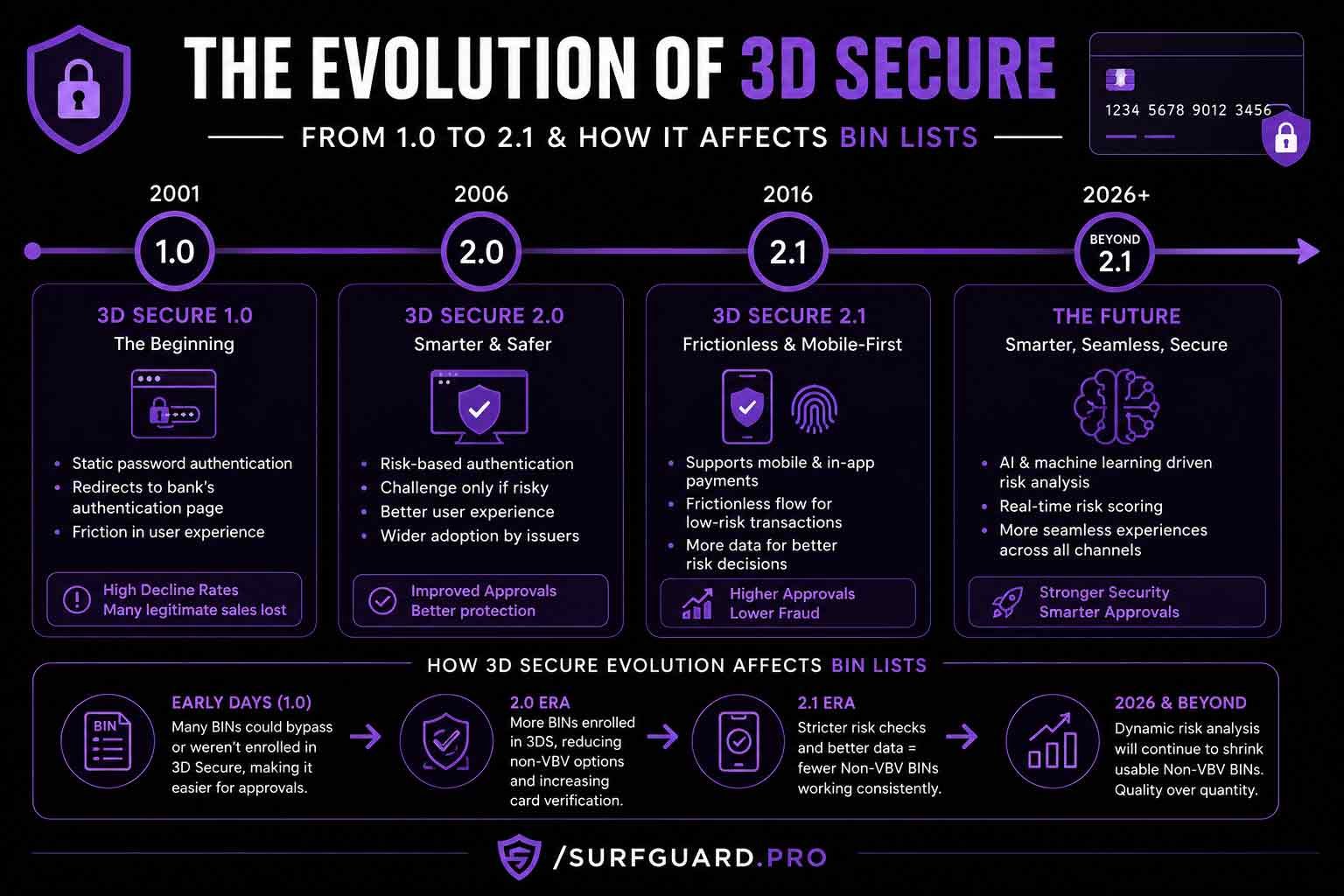
In 2026, payment security has evolved significantly. 3D Secure 2.0 and 2.1 are now standard across most regions. These newer versions use risk-based authentication, meaning the bank decides in real time whether to challenge a transaction based on factors like the merchant, the amount, the device, and the transaction history.
This means that even if a BIN was “Non VBV” in 2025, it might not be in 2026. Banks update their authentication rules constantly. A card that never triggered 3DS last year might now require verification.
Additionally, many banks have moved to biometric authentication and app-based approvals, making traditional “Non VBV” lists less reliable.
The key takeaway is that there is no permanent list of Non VBV BINs. Any list you find online is likely outdated.

5. What Is a Non VBV BIN List?
A Non VBV BIN list is a collection of BINs that are believed to not trigger 3D Secure authentication during online transactions. These lists are compiled by users based on their own testing or shared in forums.
However, the accuracy of these lists is questionable. They are often copied and pasted without verification. Many lists contain BINs that are no longer active or that have been flagged by fraud systems.
If you are looking for a reliable Non VBV BIN list in 2026, you need to understand that no list is 100% accurate. The best you can do is test BINs yourself using a BIN checker or by making small test transactions.
6. Non VBV USA BINs
USA BINs are among the most sought after in carding communities because the US has a large number of issuing banks and a high volume of online transactions. Some popular USA BINs that have been shared as Non VBV include:
- 414720 (Visa Traditional)
- 448590 (Visa Classic)
- 492181 (Mastercard Standard)
- 542418 (Mastercard World)
But remember, these BINs may not be Non VBV in 2026. Always verify before using.
7. Non VBV UK BINs
UK BINs are also popular because many UK banks have adopted 3D Secure 2.0, but some still use older authentication methods. Common UK BINs shared as Non VBV include:
- 492942 (Visa Debit)
- 492943 (Visa Debit)
- 558405 (Mastercard Debit)
Again, these are not guaranteed.
8. Non VBV Canada BINs
Canada has a mix of banks that use 3D Secure and those that do not. Some Canadian BINs that have been shared as Non VBV include:
- 453600 (Visa Debit)
- 453601 (Visa Debit)
- 549000 (Mastercard Debit)
9. Non VBV Australia BINs
Australia is similar to Canada and the UK. Some Australian BINs shared as Non VBV include:
- 446200 (Visa Debit)
- 446201 (Visa Debit)
- 552000 (Mastercard Debit)
10. Non VBV BINs vs 3D Secure
The relationship between BINs and 3D Secure is often misunderstood. A BIN does not determine whether a card is enrolled in 3D Secure. That decision is made by the issuing bank and can change over time.
3D Secure is a protocol that adds an extra layer of verification for online transactions. It is not tied to the BIN but to the card account. Two cards with the same BIN can have different 3DS enrollment statuses.
11. Why a BIN Does Not Determine 3DS
A BIN only identifies the bank and card network. It does not contain information about the cardholder’s enrollment in 3D Secure. That data is stored in the bank’s systems and is not publicly accessible.
Therefore, claiming that a BIN is “Non VBV” is misleading. The best you can say is that cards from a particular bank have historically not triggered 3DS, but that can change at any time.
12. Non VBV BIN Checker Online
A Non VBV BIN checker is a tool that claims to verify whether a BIN is Non VBV. However, since “Non VBV” is not an official classification, these checkers are essentially guessing based on user reports or historical data.
Some popular online BIN checkers include:
- bincheck.io
- binlist.net
- bins.ws
These tools can give you the issuing bank, card type, and country, but they cannot tell you if a card is currently Non VBV. Use them for basic BIN information only.
13. Non VBV MSC BINs 2026
MSC stands for Merchant Category Code, but in carding contexts, “MSC BINs” often refers to BINs used for specific merchant types or high-risk transactions. Some users search for “Non VBV MSC BINs 2026″ to find BINs that work with specific payment gateways.
In reality, MSC is unrelated to BINs. The merchant category code is assigned to the merchant, not the card. So “MSC BINs” is another misleading term.
14. Non VBV Carding Methods
Carding methods refer to the techniques used to test and use stolen card information for online purchases. Non VBV carding methods specifically focus on finding cards that do not trigger 3D Secure.
Common methods include:
- Testing BINs on small-dollar transactions
- Using BIN checkers to identify issuing banks
- Focusing on banks known for weak authentication
- Using VPNs to match the card’s issuing country
However, these methods are increasingly ineffective in 2026 as banks have strengthened security.
15. Non VBV BINs List 2026
A “Non VBV BINs list 2026” is what most people search for. These lists are shared on forums, Telegram channels, and dark web marketplaces. They typically contain dozens or hundreds of BINs with claims of being Non VBV.
But here is the truth: most of these lists are recycled from previous years. They contain BINs that may have worked in 2023 or 2024 but are now useless. Some lists are even deliberately filled with dead BINs to mislead people.
If you want a reliable list, you need to compile it yourself through testing. No public list can be trusted.

16. Free Non VBV CC
Free Non VBV CC” refers to free credit card details that are supposedly Non VBV. These are often shared in forums as “dumps” or “fullz.” However, free cards are usually:
- Already used and declined
- Dead or expired
- Shared with hundreds of other users
- Tracked by fraud systems
In 2026, free Non VBV CC is essentially a myth. If you want working cards, you need to get them from reliable sources.
17. Non VBV BINs Checker
A Non VBV BINs checker is similar to a regular BIN checker but with the added claim of identifying Non VBV status. As mentioned, this is not possible because the data is not publicly available.
Some checkers rely on user submissions to flag BINs as Non VBV, but this data is crowdsourced and often inaccurate.
18. Non VBV Checker
A generic “Non VBV checker” might refer to a tool that checks if a specific card number is Non VBV. These tools do not exist in a reliable form. The only way to truly check is to attempt a transaction and see if 3DS is triggered.
19. What Is a Non VBV Credit Card?
A Non VBV credit card is a credit card that is not enrolled in Verified by Visa (VBV) or Mastercard SecureCode. This means the cardholder does not need to enter a password or one-time code during online checkout.
However, this status can change at any time. The bank may enroll the card in 3D Secure without notice.
20. What Is a Non VBV Debit Card?
Same as above, but for debit cards. Debit cards are often more likely to be Non VBV because some banks do not enable 3D Secure on debit cards by default. But this varies by bank and country.
21. What Does “Non Verified by Visa” Mean?
“Non Verified by Visa” means the card is not enrolled in Visa’s 3D Secure program. This is the literal meaning of the term. But in practice, it is used to describe cards that do not trigger 3DS challenges.
22. High Balance Non VBV BINs
High balance Non VBV BINs are BINs that supposedly belong to cards with high credit limits and no 3D Secure. This is a double myth.
First, BINs cannot tell you a card’s balance. Second, high balance cards are often more closely monitored by banks and are more likely to have 3D Secure enabled.
If someone sells you a “high balance Non VBV BIN list,” they are selling you a fantasy.
23. Why Non VBV BIN Lists Become Outdated
Non VBV BIN lists become outdated for several reasons. First, banks continuously update their fraud detection systems. A bank that did not use 3D Secure last year may have implemented it this year. Second, payment gateways and merchants also update their security protocols. A BIN that worked on one site may be blocked on another.
Third, cardholders themselves can be enrolled in 3D Secure at any time. The bank may send a notification asking the cardholder to activate 3DS, and once they do, the card is no longer Non VBV.
Finally, BIN lists are often copied and shared without verification. A list from 2024 is useless in 2026. If you rely on old lists, you will waste time and money on dead BINs.
24. How to Evaluate a Non VBV BIN List
When you come across a Non VBV BIN list, you need to evaluate it critically. Here is how:
- Check the date: When was the list created? If it is more than a few months old, it is likely outdated.
- Check the source: Is the list from a trusted vendor or an anonymous forum? Anonymous sources are less reliable.
- Check the BINs: Use a BIN checker to verify the issuing bank, card type, and country. If the BINs are invalid or from obscure banks, the list is probably low quality.
- Test before use: Always test a BIN with a small transaction before relying on it. This is the only way to confirm if it is currently Non VBV.
Remember, no list is perfect. Even the best lists will have some dead BINs.
25. Can a BIN List Guarantee Payment Approval?
No. A BIN list cannot guarantee payment approval. Even if a BIN is Non VBV, the transaction can still be declined for other reasons:
- Insufficient funds
- Card reported stolen
- Merchant fraud filters
- IP or device mismatch
- Velocity checks (too many transactions in a short time)
A BIN list only tells you the issuing bank and card network. It does not guarantee that the card is active, has a balance, or will pass the merchant’s security checks.
26. Can a BIN Tell You a Card’s Balance?
No. A BIN cannot tell you a card’s balance. The BIN only identifies the bank and card network. The balance is stored in the bank’s systems and is not publicly accessible.
There is no tool or database that can tell you the balance of a card based on its BIN. If someone claims to have a “high balance BIN list,” they are either lying or misinformed.
The only way to know a card’s balance is to check the account directly, which requires access to the cardholder’s online banking or a successful transaction.
27. Why “Best Non VBV BINs” Is a Misleading Concept
The phrase “best Non VBV BINs” is misleading because there is no universal best. What works for one user may not work for another. Factors like the merchant, the payment gateway, the cardholder’s location, and the transaction amount all affect whether 3DS is triggered.
Additionally, a BIN that is Non VBV today may not be tomorrow. So even if you find a “best” list, it will eventually become outdated.
Instead of looking for “best” BINs, focus on understanding how 3D Secure works and how to test BINs effectively.
28. Non VBV BINs and Payment Security
Non VBV BINs are often associated with lower security because they bypass 3D Secure. However, this is not a security feature of the BIN itself. It is a reflection of the issuing bank’s policies.
Banks that do not use 3D Secure are often smaller or less technologically advanced. But even these banks can update their systems at any time.
From a payment security perspective, relying on Non VBV BINs is risky. You have no guarantee that the card is legitimate or that the transaction will go through.
29. Common Mistakes
Here are the most common mistakes people make when dealing with Non VBV BINs:
- Relying on outdated lists: Using BIN lists from months or years ago.
- Trusting free sources: Free BINs are usually dead or shared with too many users.
- Ignoring bank updates: Assuming a BIN that worked once will always work.
- Not testing: Using a BIN without verifying it first.
- Falling for “high balance” claims: Believing that a BIN can tell you a card’s balance.
- Using the same BIN repeatedly: Banks and merchants flag repeated attempts.
- Not using a VPN: Matching the IP to the card’s country reduces suspicion.
Avoid these mistakes to save time and money.
30. Pro Tips
Here are some pro tips for working with Non VBV BINs in 2026:
- Compile your own lists: Test BINs yourself and keep a private list of what works.
- Focus on newer BINs: BINs issued in the last year are more likely to be Non VBV because the bank may not have updated its systems yet.
- Use multiple BIN checkers: Cross-reference information from different sources.
- Test on low-risk merchants: Use sites with weak fraud filters for testing.
- Keep your setup clean: Use fresh IPs, devices, and browser fingerprints.
- Work with trusted vendors: If you want reliable cards, use vendors like worlddumps.site or clonecards.store. They provide verified Non VBV cards, dumps with PIN, and CVV data that are tested and working.
31. Expert Insights
Here is what experts in the field know about Non VBV BINs in 2026:
The golden era of Non VBV BINs is over. With 3D Secure 2.1 becoming the global standard, finding truly Non VBV BINs is harder than ever. The days of massive BIN lists that work everywhere are gone.
Risk-based authentication is the new norm. Banks now use machine learning to decide whether to challenge a transaction. This means that even if a card is not enrolled in 3DS, the transaction may still be flagged based on other factors.
Quality over quantity. Instead of chasing hundreds of BINs, focus on a handful of verified BINs from trusted sources. One working BIN is worth more than a thousand untested ones.
Vendors matter. The most reliable way to get working Non VBV cards is through established vendors like worlddumps.site and clonecards.store. These vendors test their products and provide fresh, working data.
32. Real-World Applications
Non VBV BINs are used in several real-world scenarios:
- Online shopping: Purchasing goods from websites that require card details.
- Digital services: Subscribing to streaming services, VPNs, or software.
- Gift cards: Buying gift cards for resale or personal use.
- Money transfers: Using CVV data to fund accounts like CashApp, PayPal, or Venmo.
For these applications, having a reliable source of Non VBV cards is essential. That is why many users turn to vendors like worlddumps.site and clonecards.store for premium cards and dumps with PIN.
33. Actionable Takeaways
Here is what you can do right now:
- Understand the basics: Know what BINs are and why “Non VBV” is not an official category.
- Test before you trust: Never rely on a BIN list without testing it first.
- Use BIN checkers: Verify the issuing bank, card type, and country.
- Keep your setup clean: Use VPNs, fresh IPs, and clean devices.
- Work with trusted vendors: For reliable Non VBV cards, visit worlddumps.site or clonecards.store.
- Stay updated: BIN lists change constantly. Keep your information fresh.
- Focus on quality: One working BIN is better than a thousand dead ones.
34. Summary
Non VBV BINs are BINs that are believed to not trigger 3D Secure authentication. However, “Non VBV” is not an official classification. BINs cannot tell you a card’s balance or guarantee payment approval. BIN lists become outdated quickly, and the best way to get working cards is through trusted vendors.
In 2026, payment security has evolved, and finding truly Non VBV BINs is harder than ever. But with the right knowledge and the right sources, it is still possible.
35. Conclusion
Non VBV BINs remain a popular topic in carding communities, but the reality is more complex than most people realize. BINs are not magic numbers that unlock payments. They are simply identifiers that tell you the issuing bank and card network.
If you want to succeed with Non VBV BINs in 2026, you need to stay informed, test everything, and work with reliable vendors. That is the only way to get consistent results.
For premium Non VBV cards, dumps with PIN, and CVV data, visit worlddumps.site. For clone cards delivered discreetly, use clonecards.store. For money transfer services like CashApp, PayPal, and Western Union, check out cvvdump.uno.
36. FAQ
What is a Non VBV BIN?
A Non VBV BIN is a BIN that is believed to not trigger 3D Secure authentication during online transactions.
Is “Non VBV” an official term used by banks?
No. “Non VBV” is not an official classification. It is a term used informally in carding communities.
Can a BIN tell me a card’s balance?
No. A BIN only identifies the issuing bank and card network. It cannot tell you the card’s balance.
Are Non VBV BIN lists accurate?
Most Non VBV BIN lists are outdated or inaccurate. You should test BINs yourself before using them.
What is the best way to get Non VBV cards?
The best way is to work with trusted vendors like worlddumps.site and clonecards.store. They provide verified, working cards.
Do Non VBV BINs work in 2026?
Some do, but finding them is harder than ever due to the widespread adoption of 3D Secure 2.1.
What should I do if a Non VBV BIN stops working?
Move on to another BIN. BIN lists change constantly, and no BIN works forever.
Final Note: For premium Non VBV cards, dumps with PIN, and CVV data, visit worlddumps.site. For clone cards delivered discreetly, use clonecards.store. For money transfer services, check out cvvdump.uno.
Suggested Related Articles
- “What Is 3D Secure and How Does It Work?“
- “How to Use a BIN Checker: A Complete Guide“
- “Payment Security in 2026: Trends and Threats“
- “Understanding BIN Ranges and Card Types“
- “How to Protect Your Cards from Fraud“