







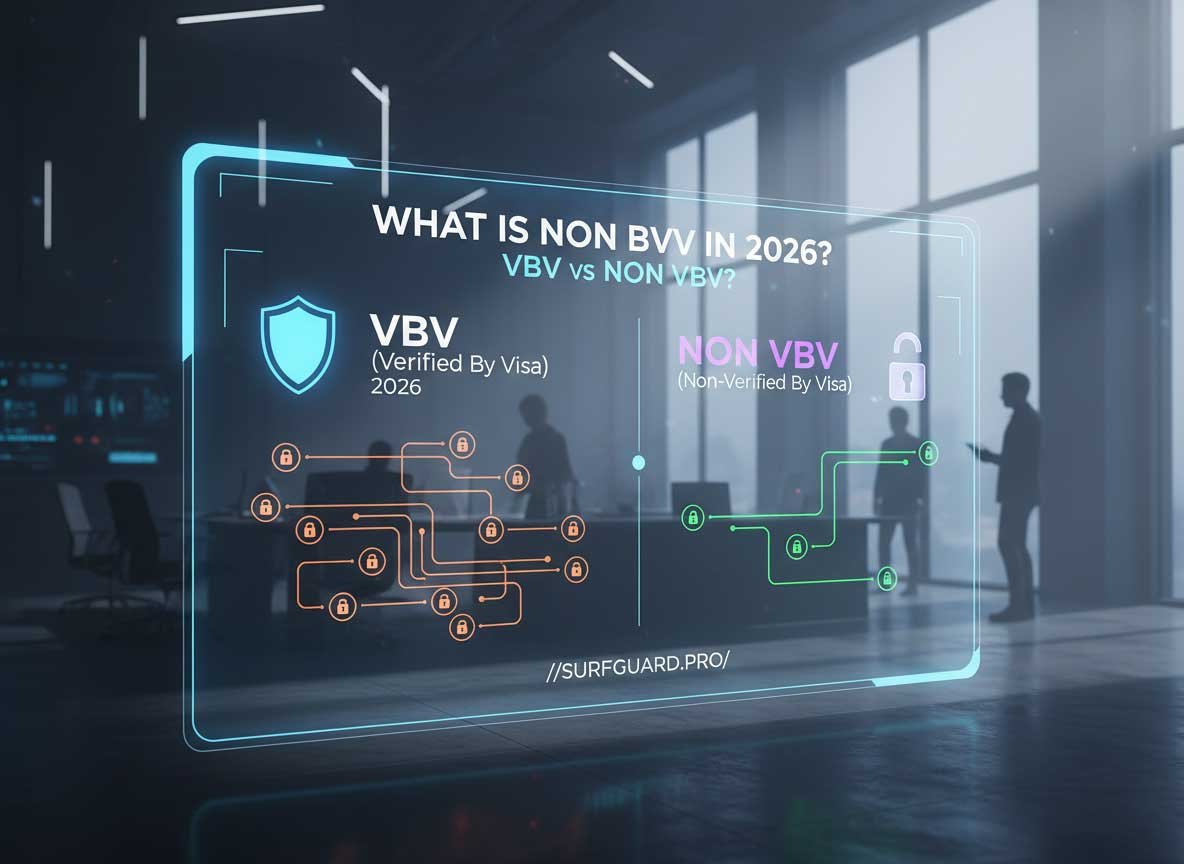
Introduction (What Is Non VBV)
If you have been searching for answers about what Non VBV means in 2026, you have landed on the right page. This term has become increasingly important for anyone working with online payment systems, BIN analysis, or card-not-present transactions. Whether you are a beginner trying to understand the basics or an experienced user looking for advanced verification methods, this guide covers everything you need to know.
Non VBV stands for Non Verified by Visa. In simple terms, it refers to credit or debit cards that do not require the 3D Secure authentication step during online transactions. This means the cardholder does not need to enter a password, code, or biometric verification to complete a purchase. Understanding this concept in 2026 is critical because the payment landscape continues to evolve, and knowing the difference between VBV and Non VBV cards can save you time, money, and frustration.
Also read: 2026 Non VBV Banks
What Does Non VBV Mean in 2026 (What Is Non VBV)
Non VBV means a card that does not require Verified by Visa authentication. When you attempt to make an online purchase with a VBV enabled card, the system redirects you to a verification page where you must enter a password, code, or approve the transaction through your banking app. With a Non VBV card, this step does not exist. The transaction processes directly without any additional verification layer.
In 2026, the term Non VBV has expanded beyond just Visa cards. It now commonly refers to any card that bypasses 3D Secure authentication protocols, including Mastercard SecureCode, American Express SafeKey, and Discover ProtectBuy. The industry has shifted, but the core concept remains the same. Non VBV cards offer a frictionless checkout experience because the payment gateway does not challenge the transaction with an authentication step.
For people searching what does non vbv mean, the simplest answer is this. Non VBV refers to payment cards that skip the extra security step during online purchases. This makes transactions faster and eliminates the risk of authentication failures.
VBV vs Non VBV The Technical Difference (What Is Non VBV)
Understanding VBV vs Non VBV requires looking at how payment authentication works behind the scenes. When you enter card details on a checkout page, the payment gateway sends a request to the card issuing bank. If the card is VBV enabled, the bank responds with a redirect URL that asks the cardholder to verify their identity. This verification can be a static password, a one time code sent via SMS, or a biometric approval through a banking app.
Non VBV cards do not trigger this redirect. The transaction moves directly from authorization to settlement without any intermediate verification step. This difference matters for several reasons.
First, VBV transactions have a higher success rate for legitimate cardholders because the bank verifies the user before approving the payment. However, they also have a higher abandonment rate because the extra step annoys some customers. Non VBV transactions have a lower abandonment rate but a higher fraud risk because the bank does not verify the cardholder.
Second, the technical infrastructure behind VBV and Non VBV is different. VBV uses 3D Secure protocols that communicate between the merchant, the payment gateway, and the issuing bank. Non VBV transactions use standard card not present processing without the 3D Secure layer.
Third, the BIN range determines whether a card is VBV or Non VBV. Some BINs are programmed to skip authentication based on the issuing bank’s policies, the card type, or the geographic region. This is why some BINs are Non VBV while others are not.
Why Some BINs Are Non VBV (What Is Non VBV)
BIN stands for Bank Identification Number. It is the first six digits of a card number that identify the issuing institution. The question of why some BINs are Non VBV comes down to several factors.
One reason is the issuing bank’s security policies. Some banks choose not to enroll their cards in 3D Secure programs. This can be a strategic decision to reduce friction for their customers or a result of outdated systems that do not support the authentication protocols.
Another reason is geographic location. Cards issued in certain countries are less likely to have VBV enabled. This is because the adoption of 3D Secure varies significantly around the world. For example, cards from some regions in Asia and Latin America have a higher percentage of Non VBV BINs compared to cards from Europe or North America.
Card type also plays a role. Prepaid cards, gift cards, and some corporate cards are often Non VBV because the issuing bank does not want to add authentication requirements to these products. Debit cards from smaller credit unions and community banks are also more likely to be Non VBV compared to major bank issued credit cards.
The age of the card matters too. Older cards that were issued before 3D Secure became standard may not have the authentication feature enabled. Even if the bank now supports VBV, legacy cards may still process as Non VBV until they are reissued.
Finally, some BINs are intentionally configured as Non VBV for specific business purposes. For example, recurring billing merchants often request Non VBV processing to avoid authentication interruptions for subscription payments.
How to Verify Non VBV Status (What Is Non VBV)
Verifying whether a BIN is Non VBV requires using the right tools and methods. Here is a step by step approach that works in 2026.
The first method is BIN lookup. Use a reliable BIN database that includes VBV status information. Enter the first six digits of the card number and check the results. Many BIN lookup services now include a field that indicates whether the BIN is VBV enabled or Non VBV.
The second method is test transaction. Make a small purchase with the card and observe the checkout process. If the system redirects you to a verification page, the card is VBV enabled. If the transaction completes without any redirect, the card is Non VBV. This is the most accurate way to verify status.
The third method is using dedicated verification tools. Some vendors offer services that check VBV status across multiple BINs at once. These tools are especially useful if you need to verify large batches of BINs quickly.
The fourth method is checking the card type and issuer. Certain card types are known to be Non VBV more often than others. For example, Visa Electron cards and Maestro cards are frequently Non VBV. Cards from specific banks in countries with low 3D Secure adoption are also good candidates.
For beginners wondering how to verify non vbv status, the simplest approach is to use a BIN lookup tool and then do a small test transaction. This combination gives you a reliable answer without needing advanced technical knowledge.
Non VBV Debit Cards vs Non VBV Credit Cards (What Is Non VBV)
Both debit and credit cards can be Non VBV, but there are differences between them. Non VBV debit cards are linked directly to a bank account and do not require authentication for online purchases. Non VBV credit cards work the same way but draw from a credit line instead of a bank balance.
Non VBV debit cards are more common in certain regions because many debit card issuers have not implemented 3D Secure. This is especially true for smaller banks and credit unions. Non VBV credit cards are less common because most major credit card issuers have adopted VBV authentication.
The practical difference matters for transaction success rates. Non VBV debit cards tend to have higher approval rates for smaller transactions but may decline for larger amounts due to daily spending limits. Non VBV credit cards generally have higher limits and can handle larger transactions more reliably.
For people looking for non vbv debit card options, prepaid debit cards and payroll cards are often the best choices. These cards typically do not have VBV enabled because they are designed for simple transactions without extra security steps.
Non VBV Gateways and Payment Processing (What Is Non VBV)
Non VBV gateways are payment processors that do not require 3D Secure authentication for transactions. These gateways allow merchants to accept payments without the verification step, which can increase conversion rates.
In 2026, most major payment gateways support both VBV and Non VBV processing. The difference is in how the gateway handles the authentication request. Some gateways automatically detect whether a card is VBV enabled and route the transaction accordingly. Others allow merchants to choose whether to require authentication.
For merchants who want to accept Non VBV payments, the key is to use a gateway that does not force 3D Secure on all transactions. Some gateways have settings that let you disable the authentication requirement for certain transactions or card types.
When searching for a non vbv gateway, look for processors that offer card not present processing without mandatory 3D Secure. These gateways are more flexible and can handle a wider range of transactions.
Also read: Non VBV Bin List 2026
Common Mistakes When Working with Non VBV BINs (What Is Non VBV)
Even experienced users make mistakes when dealing with Non VBV cards. Here are the most common errors and how to avoid them.
Mistake one is assuming all cards from a certain BIN are Non VBV. VBV status can vary even within the same BIN range. Some cards may be enrolled while others are not. Always verify each card individually.
Mistake two is using outdated BIN lists. BIN ranges change frequently as banks update their systems. A BIN that was Non VBV last year may be VBV enabled today. Use current data from reliable sources.
Mistake three is ignoring geographic restrictions. Some Non VBV cards only work in certain countries or regions. Trying to use a card outside its supported area can result in declines.
Mistake four is overlooking card type differences. A prepaid card and a credit card from the same BIN may have different VBV status. Check the card type along with the BIN.
Mistake five is failing to test before using. Always do a small test transaction to confirm the card is actually Non VBV before relying on it for larger purchases.
Pro Tips for Using Non VBV Cards (What Is Non VBV)
After years of working with Non VBV cards, here are the tips that make the biggest difference.
Tip one is to build a verified BIN database. Keep a personal record of BINs you have confirmed as Non VBV. This saves time and reduces the need for repeated verification.
Tip two is to use multiple verification methods. Combine BIN lookup with test transactions for the most accurate results. Do not rely on a single source.
Tip three is to stay updated on industry changes. Payment security evolves constantly. What works today may not work tomorrow. Follow industry news and update your knowledge regularly.
Tip four is to work with trusted vendors who provide verified Non VBV resources. This eliminates the guesswork and gives you access to pre verified BINs and cards.
Tip five is to understand the limits of Non VBV cards. These cards are not magic. They still have spending limits, geographic restrictions, and other constraints. Know the limitations before you start.
Expert Insights on Non VBV in 2026 (What Is Non VBV)
The landscape of Non VBV cards has changed significantly by 2026. Here is what experts are saying about the current state of the industry.
The adoption of 3D Secure 2.0 has increased globally, but many banks still have not fully implemented it. This means Non VBV cards remain available, especially from smaller issuers and in regions with slower technology adoption.
The trend toward biometric authentication is reducing the number of Non VBV cards. As more banks implement fingerprint and face recognition verification, fewer cards will bypass authentication entirely. However, there will always be cards that do not require verification due to issuer policies or technical limitations.
The most reliable Non VBV cards in 2026 come from specific BIN ranges that experts have tracked and verified over time. These BINs are well documented and have a high probability of being Non VBV.
For those who want to stay ahead, the key is to continuously monitor BIN changes and adapt quickly. The market moves fast, and yesterday’s information may be outdated today.
Real World Applications of Non VBV Cards (What Is Non VBV)
Non VBV cards have several practical applications in the real world. Understanding these use cases helps you see why this topic matters.
One application is online shopping in regions where VBV authentication causes frequent failures. Some international customers cannot complete VBV verification because their bank does not support the authentication method. Non VBV cards solve this problem by allowing the transaction to process without the extra step.
Another application is subscription services that need uninterrupted billing. When a VBV card requires re authentication for each recurring payment, subscriptions can fail. Non VBV cards ensure that recurring payments go through without interruption.
A third application is testing and development. Developers who build payment systems need to test both VBV and Non VBV scenarios. Having access to Non VBV cards allows them to test the full range of transaction types.
For businesses that operate in multiple countries, Non VBV cards can simplify cross border payments. They reduce the complexity of dealing with different authentication requirements in different markets.
Actionable Takeaways on What Is Non VBV
Here is what you should do after reading this guide.
First, understand the difference between VBV and Non VBV cards. This is the foundation for everything else.
Second, learn how to verify Non VBV status using BIN lookup and test transactions. Practice these methods until they become second nature.
Third, build a personal database of verified Non VBV BINs. This will save you time and effort in the long run.
Fourth, work with trusted vendors who provide verified Non VBV resources. This is the most efficient way to get reliable cards and BINs.
Fifth, stay updated on changes in the payment industry. Non VBV status can change, and you need to know when it does.
Summary of What Is Non VBV
Non VBV in 2026 refers to payment cards that do not require Verified by Visa or 3D Secure authentication. These cards process transactions without the extra verification step, making them faster and more reliable for certain use cases.
The difference between VBV and Non VBV comes down to whether the card triggers a 3D Secure authentication request. Some BINs are Non VBV due to bank policies, geographic factors, card type, or age of the card.
Verifying Non VBV status requires BIN lookup and test transactions. Common mistakes include assuming all cards from a BIN are Non VBV, using outdated information, and ignoring geographic restrictions.
Non VBV cards have real world applications in international shopping, subscription billing, and payment system testing. They are a valuable tool when used correctly and with proper verification.
Conclusion of What Is Non VBV
Understanding what Non VBV means in 2026 is essential for anyone working with online payment systems. This guide has covered the definition, the technical differences, the reasons behind Non VBV BINs, and the methods for verification.
The key takeaway is that Non VBV cards are not a mystery. They are simply cards that do not require the 3D Secure authentication step. With the right knowledge and tools, you can identify and use them effectively.
If you are looking for verified Non VBV resources, visit Cvvdump.com or Worlddumps.com to get legit dumps with pin and carding materials. These trusted vendors provide pre configured solutions that save you time and effort.
Also read: Non VBV Bin Checker 2026
Frequently Asked Questions on What Is Non VBV
What does non vbv mean in simple terms?
Non VBV means a credit or debit card that does not require the Verified by Visa authentication step during online purchases. The transaction processes directly without any additional verification.
What is the difference between VBV and Non VBV?
VBV cards require the cardholder to enter a password or code during checkout. Non VBV cards skip this step entirely. The main difference is the presence or absence of 3D Secure authentication.
Are Non VBV cards legal to use?
Non VBV cards are legal payment instruments issued by banks. Using them for legitimate purchases is legal. Using them for fraudulent purposes is illegal.
How can I check if a BIN is Non VBV?
You can check a BIN using a BIN lookup tool that includes VBV status information. You can also do a small test transaction to see if the card triggers authentication.
What is a non vbv debit card?
A non vbv debit card is a debit card that does not require 3D Secure authentication for online transactions. It processes payments directly without a verification step.
What is a non vbv credit card payment?
A non vbv credit card payment is an online transaction made with a credit card that does not trigger the Verified by Visa authentication process.
What is a non vbv gateway?
A non vbv gateway is a payment processor that does not require 3D Secure authentication for transactions. It allows merchants to accept payments without the verification step.
Where can I find Non VBV BINs and cards?
You can find verified Non VBV resources from trusted vendors. Visit Cvvdump.com or Worlddumps.com to get legit dumps with pin and carding materials.


